
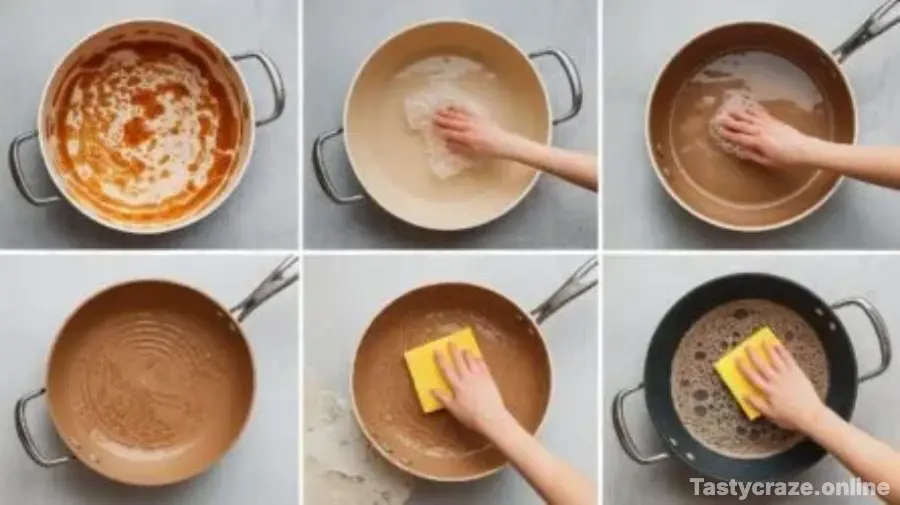
Sticky pots and pans are a problem all over the world. The gunk left behind by that pan ruins the entire surface of the pan. It makes your next meal a disastrous one. You don’t have to throw it away. We have easy hacks for you.
You can restore your pans back very easily. No more scrubbing or harsh chemicals. The following tips will save your favorite pots. We will restore your sticky cookware to its nice looking condition again. Let’s and get your kitchen equipment in great shape.
Discover global flavors with The Rise of Fusion Food Trends in 2025, stay healthy during fasting with Nutritionist-Approved Ramadan Meal Plans for Busy People, and learn to balance taste and wellness in How to Eat Clean Without Cutting Flavor.
What Makes Cookware Sticky?
The first step towards understanding the enemy is to understand them. This sticky cookware occurs due to a couple of reasons. Usually, it is an accumulation of small pieces of food particles. These particles interact in oil and heat.
This results in a hard sticky layer. It can also be caused by the incorrect use of oil. Oil with a low smoke point burns easily. Oils leave behind a sticky residue. High temperature is another major factor. It can destroy the surface of the pan. This contributes to increased food clinging even more.
There is a major issue with a damaged non-stick coating. Scratches give places for food to get trapped. This causes your sticky cookware problem to be worse. However, prevention is dependent on proper care.
The First Step: A Gentle Deglaze
Before going for any deep cleaning process, do this. A stagnant deglaze cannot be good. It is the first defense against sticky cookware. This method is very gentle and is effective.
Place your pan on the stove. Turn the heat to medium. Pour in a bit of water. And vinegar or wine can be used too. Simmer for a few minutes to cook the rice.
Use a wooden spoon or spatula. Scraping the bottom of the pan will be helpful as well. The liquid brings the bits of stuff stuck on up. The dirt will melt off little by little. This straightforward solution to small problems is often the remedy. It gets the pan ready for additional cleaning.
Reviving Your Non-Stick Pans
The non-stick pans require special care. Harsh scrubbing will destroy their delicate covering. Not aggressive cleaning is good non-stick pan cleaning. It conserves the surface for use in the future. This is very important to your sticky cookware.
Try a baking soda paste. It is a light abrasive that does great.
- 2 tablespoons of baking soda
- 1 tablespoon of water
- A few drops of dish soap
Mix these into a smooth paste. Apply it to the sticky areas. Let it sit for about 20 minutes. Scrub gently while using a soft sponge. Then wash it completely with warm water. Your sticky cookware should cook like new.
We often make simple errors. These may just destroy our pans. It is knowing them that is half the battle. Below are some common areas of concern along with the solution.
The Cookware Care Guide
Mistake: Using metal utensils on non-stick pans. This scratches the coating, causing food to stick.
Fix: Always use wood, silicone, or plastic utensils. They are gentle on the surface.
Mistake: Putting hot cast iron in cold water. This can cause thermal shock, cracking the pan.
Fix: Let your cast iron pan cool down completely before washing it with water.
Mistake: Using abrasive steel wool on stainless steel. This creates fine scratches that trap food particles.
Fix: Use a non-abrasive scrubber or a paste of baking soda for tough spots.
Mistake: Stacking pans without protection. This can scratch and damage surfaces.
Fix: Place a paper towel or a pan protector between each pan when storing.
There is no lack of technique for anything in the kitchen. This is the case with cleaning as well as cooking. Andre Checklist cheff said, “It is the gentle methods which often bring the best results.” And in the process, they save you years of money on your investment.
The Chef’s Golden Rule
“A well-maintained pan is a chef’s best friend. Never use extreme temperatures. Gradual changes and gentle cleaners protect the pan’s integrity and prevent future stickiness.”— Antoine Dubois
This suggestion is critical for all types. Be it non-stick, or be it cast iron. Magneto Score tools: Maintenance is crucial. Your sticky cookware can be a thing of the past.
Stainless Steel Cleaning Hacks That Work
Stainless steel is tough but impervious. It is capable of forming tough and burnt in messes. These need a little bit more power. Fortunately, simple stainless steel cleaning hacks do well. You don’t need fancy products.
Boiling water is suitable for hard stains. Add about an inch of water to the pan. Additionally, put a tablespoon of baking soda in there. Bring it to a boil. Let it simmer for 5-10 minutes. The use of heat and soda will dislodge grime. I use a wooden spoon so that I can bash a bit. This is an excellent method of dealing with sticky cookware.
A very powerful approach is by using vinegar. After deglaze, add vinegar – white. It must be able to cover the base of the pan. Let it sit for 30 minutes. The acid is used to dissolve the residue. Then scrub using a sponge that is not abrasive. This makes removing stubborn food much easier.
Using these methods can be compared to the following. It saves you to pick the right one.
Catch up on viral bites in Top 10 TikTok Food Trends You Must Try in 2025, explore local delights through How Lahore Street Food Defines Its Nightlife, and uncover hidden gems in Exploring Street Food Gems Around Lahore.

🍳 The Ultimate Cookware Cleaning Guide
Non-Stick
✅ Best Cleaning Method
- Baking soda paste, gentle soap
❌ Things to Avoid
- Abrasive scrubbers, metal utensils
Stainless Steel
✅ Best Cleaning Method
- Vinegar soak, boiling with baking soda
❌ Things to Avoid
- Steel wool, bleach-based cleaners
Cast Iron
✅ Best Cleaning Method
- Coarse salt scrub, hot water
❌ Things to Avoid
- Dishwasher, long soaks, harsh soap
It is infinitely important to always rinse well. Any cleaner used can leave an impact on your food if not thoroughly rinsed off. Your stainless steel lasts according to the care that you give it. This will prevent the possibility of any future cases of sticky cookware.
Mastering Cast Iron Care
Cast iron is a work horse in the kitchen. Proper cast iron care is absolutely necessary. It produces a natural non-stick texture. This is referred to as a patina or seasoning. And if done wrong, it leaves this layer stripped.
Never pon in cast iron into the dishwasher. Do not soak it for extended periods of time. These actions will make rusts. They will destroy your hard earned seasoning. This makes for very sticky cookware.
The best method is simple. While the pan is still hot, do it with hot water. Scrub with a stiff brush. For stuck on food use coarse salt. Pour salt into the pan. Scrub the dirt using a cloth. The salt functions as a perfect abrasive. It cleans without removing the seasoning.
Dry it immediately right after cleaning. Put it on low heat for a minimum of a few minutes. This removes all moisture from evaporation. Then, put a small coat of cooking oil. Clean excess using a piece of paper towel. This helps to maintain the seasoning. It prevents a sticky cookware with cast iron.
Powerful Natural Cleaning Solutions
It is not necessary to use aggressive chemicals. Your kitchen cabinets contain powerful cleaners. These are natural cleaning solutions that are safe and effective. They can be used to clean sticky cookware.
One of the best are the lemon and salt scrub.
- Cut one lemon in half.
- Sprinkle coarse salt in the pan.
- One half lemon could be kept for scrubbing.
- Then scrub while you are squeezing the lemon onto the cloth.
The salt provides abrasion. The acid in the lemon penetrates the grease. This combination is amazing. It considered to work well on stainless steel and enamel. It will leave your pans fresh and clean.
Cream of tartar is also a good solution. Mix entirely two tablespoons of it in water. Prepare a paste, which can be used for cleaning your sticky cookware. This works properly for aluminum pans. And it can brighten them up a lot. These solutions are environment-friendly. They are also very inexpensive.
Here is a quick pro tip. It is a simple trick I learned. It has saved me a lot of time.

⭐ Pro Tip: The Dryer Sheet Trick
For a really tough, burnt-on mess, place a dryer sheet in the pan, fill with warm water, and let it soak overnight. The chemicals help break down the carbon, and the mess should wipe right off!
All the ordinary kitchen items are powerful. They demonstrate that you don’t need expensive detergents around. There are ways to treat the majority of the sticky cookware problems. Just think using what you already have.
How to Prevent Sticky Cookware
The best remedy is to avert the situation. Stop your pans from sticking to pan bottoms. A few simple habits can help. This way you will not take time scrubbing in the future. Your cookware will be used for a lot longer.
Always ensure that you preheat your pan. Add oil to a hot pan, not cold. This makes for a superior barrier. It prevents the sticking of food right away. Bring oil up to temperature before adding food to cook. And you will make a big difference.
Use the right amount of fat. Sticking happens when too little oil is added to the cooking surface. This in itself is often a contributor to sticky cookware. Even non-stick surface areas require a small amount of oil. A thin coating is all you need.
Avoid excessively high heat. Most cooking does not need it. High heat burns food and oil. This results in the formation of that too-difficult-to-remove residue. Cook on the medium heat whenever you can. This is a very important step in avoiding sticky cookware.
Accidentally clean your pans after use. Do not let food sit in them. This gives it time to harden. You are best off rinsing it off quickly (when it has cooled) afterwards. This keeps them from depositing for years at a time. Keeping them clean can avoid major issues from arising.
My Personal Battle with a Burnt Pan
Let me share a quick story. I once burnt a new stainless steel pan. I was trying to make a caramel and I embarked on a distraction. The sugar became a black and solid rock. I thought that the pan was toast for ever.
The “Volcanic” Cleaning Method
“I boiled a solution of water and vinegar, let it simmer, then added two tablespoons of baking soda. The fizzing action brought the whole burnt layer up. It was like magic.”
This experience brought me the virtue of patience. It also introduced me to the power of simple Chemistry. You can solve most how to clean burnt pans problems. You just need to have the right technique. Your worst sticky cookware is not beyond repair.
Let us look at the advantages and disadvantages of DIY cleaners.
| Factor | DIY Natural Cleaners 🌿 | Commercial Cleaners 🧪 |
|---|---|---|
| Cost | Very inexpensive, pantry staples. | Can be expensive, especially specialty products. |
| Safety | Food-safe and non-toxic. | May contain harsh chemicals requiring ventilation. |
| Environmental Impact | Low impact, biodegradable ingredients. | Higher chemical usage, packaging waste. |
| Effectiveness | Good for general cleaning. | Very powerful for extreme cases. |
Both of them have their role in the kitchen. DIY is best suited for daily issues of sticky cookware. It is safer, cheaper, and is effective. Use Commercial Cleaners Only in Case of Emergency.
For more information on the science of why food sticks to pans, this article from America’s Test Kitchen offers an excellent more in-depth look into the science of how food sticks to pans. It goes on to describe polymerization in detail.
Cleaning your cooking instrumentation is a life-long task. It is not a one-time fix. A constant discipline insures long life. It also makes the cooking process a more pleasant one. No one enjoys cooking with ugly sticky cookware.
Below we have provided a simple weekly on-going plan of action. You should follow it so that your pans will remain like new. It will prevent serious build up. This checklist has made maintenance easy.
📋 Weekly Cookware Maintenance
- 01
- 02
- 03
- 04
- 05
This routine takes really little time. But it pays off in the long run. Less stickiness in the cookware, meaning less battles dealing with the stickiness. Your pans will last longer and work maximally. Cooking will be much more of a smooth process.
Final Thought
Great cooking articles can be conquered. You already know what you need to know. From Tender deglazing to powerful salt scrubs. Both of these techniques help to return your pan to release performance. Always remember that prevention is your best protection. Proper heating, cleaning and storage are important. Using such hacks, you can do good-bye to certain perennials scrubbing. You can have your beautiful and non-sticky cookware for every meal.

Sharpen your cooking game with 7 Common Kitchen Mistakes You’re Probably Making, save energy using 10 Kitchen Hacks That Save Time & Gas, and grow your food brand with How to Market Your Bakery on Instagram.
Frequently Asked Questions
1. Can I use steel wool on any type of sticky cookware?
No, you should never use steel wool on non-stick pans or coated pans as it will permanently scorch the surface. It is also too abrasive for most stainless steel, so the micro-scratches cause future sticking. In extreme cases, this can only be done in very thick, uncoated pans such as cast iron.
2. Is it safe to use oven cleaner on my sticky cookware?
The eradication of it is not generally recommended. Oven cleaners contain very harsh chemicals, such as lye, which can corrode the surface of many pieces of cookware, such as aluminum and non-stick materials. Never use anything but cleaners specifically made for cookware or anything custom made per the DIY methods above.
3. Why is my brand new non-stick pan already sticky?
This often occurs as a result of using cooking sprays. The propellants and additives within sprays burn at lower temperatures forming a hard residue that is difficult to remove not responding to normal washing. Using a small amount of oil is a better choice for your sticky cookware problems.
4. How can I fix a scratch in my non-stick pan?
Unfortunately, you cannot truly fix a deep scratch in a non-stick coating. Once the coating is compromised, it may leach into food and will continue to peel. It is safest to replace a pan with significant scratches in its cooking surface.
5. Does putting a hot pan in water really damage it?
Yes, and this does result in thermal shock. In addition, the abrupt temperature fluctuation can result in the deformation or even cracking of metal (preferably cast iron or clad stainless steel). Last but not least, always allow your sticky cookware to cool at least for a few minutes before washing them.