
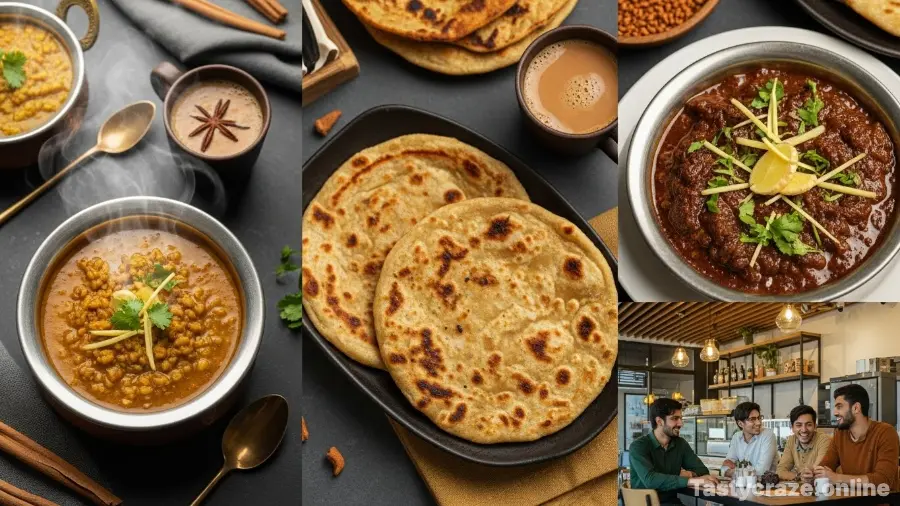
The Comfort Food Comeback is here and, frankly, it is like coming home. Remember the smell of your nani’s hath ka khana? I simply – soul hugging taste?
That feeling is very much what’s taking over the Pakistan food scene.
We’re seeing a massive shift. With this come fancy, complicated dishes taking a backseat.
In their place, menus are exalting the food that raised us. This is the new era of dining.
The Great Return to Simplicity
For years, the trend was all about fine dining. Think foams, gels and miniature portions on massive plates.
However, something has changed in the Pakistani diner. We’ve become bored of deconstructed concepts.
We crave authenticity. We crave connection.
Therefore, restaurants and cafes are finally listening. They know that real luxury is not about exotic ingredients.
Instead, it’s the extremely comforting experience of perfectly made bowl of Daal Chawal. This is the heart of the Comfort Food Comeback.
This movement is a reaction to our collective need for nostalgic and warm. After all, life itself is complicated enough.
Your food shouldn’t be.
Why Are We Craving Desi Comfort Food Now?
The psychology is simple. These dishes are pad commemorative memories.
One bite of a crispy hot samosa can send you back to a rainy university afternoon. A spoonful of Kheer may remind you of Eid celebration with your family.
This emotionally attached relationship is powerful.
Furthermore, these foods are scientifically proven to make us feel good. The combination of carbs, fats and familiar spices can make our brains release serotonin.
This is the “feel-good” hormone.
So, when you are stressed or have low energy, your body does not crave a quinoa salad.
It craves the rich, oily and spicy embrace of desi comfort food. It’s dead more than hunger; that’s a deep seated emotional need.
The Stars of the Comfort Food Comeback: Nostalgic Dishes Reimagined
The question to know what exactly are these dishes that are leading the charge! They are the unsung heroes of a million Pakistani households and are now undergoing a five-star facelift. This revival of the nostalgic Pakistani dishes is the crux of this whole trend.
Daal Chawal: The Unbeatable Champion
Let’s begin with the undisputed King; Daal Chawal.
For so many generations this was the ultimate symbol of an unadulterated, satisfying meal. It was dependable. It was always there.
But it was seldom to be seen on a restaurant menu. It was considered too simple.
But now, that has completely changed.
Modern day cafes in Lahore, Karachi and Islamabad are proudly doing the Daal Chawal. But they’re adding a twist.
Instead of having a plain steel plate you get it rustic ceramic bowl.
The daal isn’t just any daal. It’s a slow-cooked Maash ki Daal or a creamy Daal Makhni which is topped with a sizzling tarka of fried onions, garlic and whole red chillies.
Alongside, you can get shami kababs, pickles, a fresh salad and mint raita.
It’s the same soulfood meal, taken one notch up. As a result, it makes sense to have a cafe price point but still be hitting that nostalgic spot. This is the Comfort Food Comeback in its most basic state.

Halwa Puri & Chai Paratha: The Breakfast of Champions, All Day Long
Sunday mornings in Pakistan are synonymous with one thing – a greasy, glorious Halwa Puri breakfast.
This tradition used to be reserved exclusively for dhabas and street-side vendors. But not anymore.
The cafe culture in Pakistan has accepted it whole-heartedly.
Places in Gulberg, Lahore and Clifton, Karachi now offer “All-Day Desi Breakfast” platters. These layouts of platters cannot be not seen.
You get fluffy puris, rich suji ka halwa, spicy channay and rich potato bhaaji.
Similarly Chai Paratha is no longer quick fix. It’s a real cafe experience in there. The Comfort Food Comeback has done this simple duo an art.
There are now dozens of different types of parathas. It’s a thought of gooey cheese parathas, spicy chicken tikka parathas or even a decadent Nutella paratha for all these dishes but for dessert.
The chai has evolved too. Beyond simple doodh pati, you have Karak Chai, Matka Chai, Tandoori Chai and even Saffron Chai.
Each cup is brewed to perfection and provides a warm hug to go along with the flaky buttery paratha.

✅Checklist: The Ultimate Desi Comfort Foods
Daal Chawal
The humble king, now served with gourmet toppings and sides.
Halwa Puri
The Sunday breakfast classic, now available all day in chic cafes.
Chai Paratha
The timeless duo, reinvented with dozens of new flavors.
Nihari & Paya
The slow-cooked legends, perfect for a hearty brunch or dinner.
Bun Kabab
Karachi’s street food hero, now with gourmet buns and special sauces.
Khichdi
The ultimate sick-day food, reimagined as a wholesome, healthy bowl.
Nihari & Paya: A Hearty Embrace in a Bowl
When the winter chill hits, Nihari and Paya are the go-to rich slow cooking foods of Pakistanis.
These are not merely just meals, they are experiences.
Traditionally, Nihari was a breakfast for the labourers to give them energy for the whole day. But nowadays it is a celebratory dish and enjoyed by everyone. It’s one of the most popular traditional winter foods.
Cafes and modern restaurants are now serving the Nihari with all the trimmings: fresh ginger, coriander, green chillies and a squeeze of lime.
It’s usually eaten with fluffy hot Khamiri Roti or rogani naan.
The Comfort Food Comeback means it’s no longer necessary to visit the old city to get authentic Nihari. You can find a fabulous bowl in the middle of a modern commercial area.

This accessibility has made these classic dishes available to a whole new generation. It’s a win-win scenario for both everyone who drinks from this glass holder. For a greater insight into such food production mores, there are far better opinions from food experts from Food Tribune, which you can refer to.
Bun Kabab and Khichdi: The Humble Heroes
The Comfort Food Comeback also is a celebration of the underdogs.
Take the Bun Kabab. For decades, it was the preferred snack of students and office workers in Karachi. It’s inexpensive, filling and absolutely delicious.
Now, trendy places are deconstructing, rebuilding it.
They use brioche buns, gourmet minced meat or patties made from lentils and signature sauces such as tamarind chutney or spicy mint mayo. It’s the same aromatic, it’s the same soul but with a fancier outfit on.
And then there’s Khichdi.
Often dispised as ‘food for the sick’ Khichdi is making an appearance most people would not have thought of as a health-conscious comfort meal.
Cafes are serving it as a wholesome “grain bowl”, made with brown rice and other multiple lentils, topped with ghee and served with a side of yogurt.
It’s promoted as good, easy-to-digest food. It’s proof that it is possible to eat clean and still not sacrifice comfort of a traditional dish. This shift underscores a major trend in the consumer behavior.
The City-Wise Breakdown: Where to Experience the Comfort Food Comeback
This trend doesn’t get to take place in a vacuum. It’s flourishing in the cities of Pakistan, with every city imparting its own distinct flavour to the movement.
Lahore: The Heart of the Revival
Lahore has been the undisputed food capital of Pakistan. The Comfort Food Comeback is no surprise, then, that it is most prominent here.
The decent city’s food landscape is an esthetics paradox. You have the old and historic Food Street in the Walled City, and then you have the chic cafes of Gulberg and DHA.
Interestingly, they are both now celebrating the same food.
New-age dhabas and cafes in places such as Y-Block and Z-Block are the epicenters for such a trend. They have got the art of serving the desi comfort food in the Instagram-worthy environment.
The Lahore street food trends are now transferring indoors. The same gol gappay and dahi bhallay that you would find on a cart are now served as appetizers in air-conditioned restaurants.
This is a smart business move. It appeals to the homesickness of Lahore street food, and gives the comfort and hygiene that the modern diner demands. You can read more of these amazing street food gems hiding at around the city.

Karachi: Coastal Comforts and Cafe Culture
Karachi has as diverse and revved-up a food scene as the city itself. The cafe culture in Pakistan is arguably most mature in Pakistan.
From the busy lanes of Burns Road to the gourmet eateries of Clifton and Defence, Karachi has a huge range of food experiences.
The Comfort Food Comeback in Karachi is coastal in nature. Alongside Appeal of some old classics like Nihari and Biryani (Karachi’s one true love) and revival of seafood traditions.
Cafes are selling simple and homely fried fish and prawn karahi again.
Moreover, Karachi is the home of the Bun Kabab and its modern revival is testimony to the love of the city’s street food heritage.
The city is also leading the trend of chai-paratha together, with innumerable places to provide a cosy environment for people to relax.
Islamabad: Polished and Perfected
Islamabad, with its calm and orderly atmosphere, is a more polished take on the Comfort Food Comeback.
The cafes in the Kohsar market, F-7 and Beverly Centre are known for their sophisticated decor and their curated menus.
Here, comfort food is served with style.
You will find a spot-on platter of Sarson ka Saag and Makki ki Roti in winter and a fancy Chicken Karahi in an ornate copper pot.
The focus in Islamabad is on quality ingredients and perfect execution. It’s not so much rustic as it is a high end, comfortable dining experience.
The trend proves that even in the formal framework of the capital, the heart wants what your heart wants – a pinch of home. And with more people trying these recipes, it’s a good time to avoid common kitchen mistakes and perfect your dish.
Dhabas vs. Modern Cafes: A Comfort Food Showdown
☕ Old-School Dhabas
Vibe: No-frills, authentic, and bustling with energy. Think plastic chairs and steel plates.
Food: Unapologetically oily, spicy, and delicious. The recipe is generations old.
Price: Extremely budget-friendly. A full meal for a fraction of the cafe price.
Best For: An authentic taste experience and soaking in the local culture.
✨ Modern Cafes
Vibe: Curated, comfortable, and aesthetic. Perfect for photos and long conversations.
Food: A refined, often healthier take on the classics. Presentation is key.
Price: Mid-range to premium. You pay for the ambiance and quality control.
Best For: A comfortable family outing or introducing friends to desi food in a chic setting.
The Fusion Factor: The Modern Twist on Tradition
A key element to the Comfort Food Comeback is the smart integration of modern tastes. It’s not merely about making it to the old recipes, it’s about innovating the old recipes.
This has given rise to some interesting fusion food trends.
Chefs are asking the creative questions. What happens if you add cheese in paratha? Or turn traditional Chapli Kabab to slider?
The results are often spectacular and as such have been massive hits, specifically with young audiences who have an understanding of global trends, often following TikTok food trends.
Examples of Successful Fusion:
- Nutella Paratha: A dessert which is a combination of a Pakistani paratha with the greatest chocolate spread in the world. It’s a guaranteed winner.
- Chicken Tikka Pizza: A fusion around for some time now but now perfected, with the authentic spices/toppings.
- Butter Chicken Pasta: Creamy tangy butter chicken gravy based pasta sauce. It’s the best of both worlds.
- Daal-Chawal Arancini: A smart experiment in which the leftover will be of daal chawal is cooked into the Italian-style fried rice balls.
These fusion dishes serve as an entrance. They bring people to traditional tastes in a familiar format. It’s a smart way of ensuring that the culinary heritage does not die out.
However, there is a fine line to creating a successful fusion. The point is to try to enhance the original dish, but not overpower it. As is well known to foodies, sometimes the best recipes are all about simplicity and a few good kitchen hacks.
This is the reason that the Comfort Food Comeback is so successful. It is respectful of the soul of the dish, yet gives it a new, exciting appearance. It’s also a great business model, which everyone looking to market your bakery or restaurant on social media should study.

The Business of Comfort: Why This Trend is Here to Stay
From a business perspective, the Comfort Food Comeback makes perfect sense.
Firstly, the ingredients for desi comfort food are local, cheap and easily available. This keeps operational costs lower when compared to international cuisine of exotic ingredients.
Secondly, there is guaranteed market. In every family from the teen to grandparent everyone enjoys a good Biryani or Karahi. The audience is very large and varied.
Thirdly these dishes keep higher profit margin. A plate of Daal Chawal which very little effort and cost can be sold in a cafe setting at a decent price because of the value added on account of ambiance, presentation and service.
This is not a short-lived moment, but a sustainable business model. It helps to match consumer taste for authenticity, and it is a lucrative avenue for restaurateurs. Reputable Pakistani food publications such as the food section of Dawn Images have also covered this change in preferences for eating food to great extent.
Furthermore, this trend was a perfect fit to the seasonal habits of eating such as preparing special menus for winters or Ramadan meal plans that are both comforting and energizing. One thing the Comfort Food Comeback is incredibly adaptable with.
The Future of the Comfort Food Comeback
For this delicious movement so what’s next? The Comfort Food Comeback is likely to change even more.
We can expect to see an increase in regional cuisines dives. Beyond Punjabi and Mughlai, the eateries may then begin to explore Sindhi, Balochi, and Pashtun comfort foods.
Imagine seeing Sindhi Biryani, Balochi Sajji or Peshawari Chappli Kabab giving the same modern treatment. There are no limits to the possibilities.
We will also probably see more emphasis on health. Chefs will continue to find ways of making these dishes more light and nutritious without compromising taste. Think baked samosas, air fried pakoras and using of whole grains.

The Comfort Food Comeback is more than a trend, it’s something of a cultural rediscovery. It’s a celebration of who we are, who we came from, of the simple things of life that we share as a people.
It reminds us that there are times when what is on the table is supposed to be the most sophisticated meal in the world. For people seeking to create these dishes in their own homes, several sources such as SooperChef contain step-by-step video tutorials on how to cook many of these traditional dishes.
To conclude, the return to our culinary roots is a powerful and heart-warming phenomenon. It alkyl demonstrates that although we may venture into the Americas of the world, only our hearts (and stomachs) shall logistically belong in the timeless, soul-food dishes of home. The Comfort Food Comeback is a delectable testament to the truth of that.
It is a celebration of what is truly important about food: taste, memory and a whole lot of love. The proof’s on the menu in all major cities of Pakistan; The Comfort Food Comeback is not merely a fad, it is the new normal.
Frequently Asked Questions (FAQ)
1. Why is comfort food so popular in Pakistan right now?
Comfort food is making a massive comeback in Pakistan since it delivers a sense of nostalgia, emotional security, and familiarity. In a fast-paced life, the people are craving for the real simple flavours of home cooked extravaganzas such as Daal Chawal, Karahi etc., which are served in these new age cafes.
2. What is the most popular comfort food in Lahore?
While Lahore loves all its food, arguably, the pinnacle of the comfort food experience is the weekend Halwa Puri breakfast or a hearty lever of Nihari. Infuriated with that further, the Chai-Paratha combo served in stylish cafes is super popular for a casual hangout.
3. How are cafes changing traditional Pakistani dishes?
Cafes are taking traditional dishes and raising them in the style and quality of ingredients, contemporary presentation (serving in rustic bowls for example) and a comfort and aesthetics. They also get innovative, making fusion products such as Nutella parathas or butter chicken pasta, which makes Comfort Food Comeback an exciting adventure for all ages.
4. Is the comfort food trend making Pakistani food unhealthier?
Not necessarily. While many traditional dishes are rich, the new trend also includes focus on healthier versions of dishes. Many cafes are providing options such as grilled (instead of fried) kababs with a lesser quantity of oil or rethinking dishes such as Khichdi as wholesome grain bowls in response to health-conscious consumers.
5. Where can I find the best modern desi comfort food in Karachi?
In Karachi can be found some very good modern versions of desi comfort food in places such as DHA and Clifton. Many of the cafes and restaurants in these areas contain a witchlist menu that offers elevated versions of some of their food classics, like Bun Kababs, Biryani’s and many types of Karahi, combining old-fashioned taste and modern twist in the dining experience.