
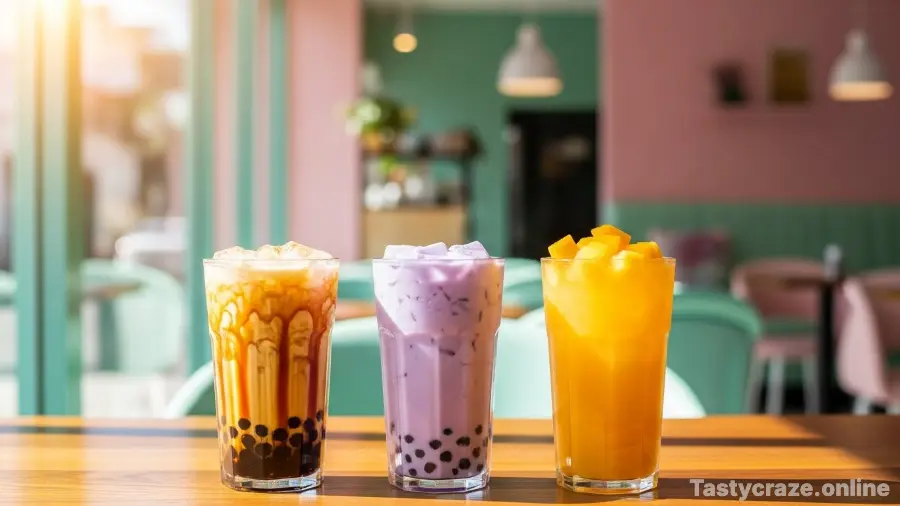
The Boba Tea Craze is sweeping across Pakistan and the way we think about a simple cup of tea. It’s a seismic change in our cafe go culture.
Not so long ago, the term ‘tea break’ meant one thing. It was a steaming cup of doodh patti, from a road-side dhaba. Or a karak chai perhaps with friends.
Today, however, there is a new contender in the ring.
Walk the posh lanes of DHA in Lahore or the chock full streets of Karachi. You’ll see a different scene. Young people are queueing up, not for chai, but for a colourful, sweet and chewy drink served in a sealed plastic cup.
This, my friends, is the core of the Boba Tea Craze.
It’s a trend that has gone from being a sort of (niche) interest to that of a full-blown cultural phenomenon. But what is it about this Taiwanese import which has so seduced the hearts (as well as taste buds) of the Pakistani people?
Tell you what, in this deep one, we will cover everything. We will go back to the origins of this trend. We’ll see that it is similar to the chai that we all love. We will also research the price, the health side of it and where you can get the absolute best cups.
Let’s unravel the massive Pakistani Boba Tea Craze.
What Exactly Is This Drink Fueling the Boba Tea Craze?
First things first though and breakdown for anyone new to the scene. What is bubble tea?
At its most basic, bubble tea, or boba tea, is a tea-based drink. It first appeared in Taiwan in the 1980s.
It is a simple concept with endless variations. Consequently, it makes this incredibly appealing to a great audience.
Deconstructing the Boba: Tea, Milk, and Toppings
The base is normally black, green or oolong tea. This base is then mixed with milk or fruit flavourings.
Then comes the magic. The drink is shaken with ice (from where the name “bubble tea” comes, from the froth that appears on the top of the drink). Finally, it’s served with a number of toppings.
These toppings are really what define it. They add a new dimension, texture, and fun to the drinking experience.
You can get anything, from fruit jelly to popping boba (which burst in your mouth) and pudding to red beans. However, one topping is the king of them all.
The Star of the Show: Chewy Tapioca Pearls
The most iconic as a topping, is the “boba” itself. These are the very tiny and chewy black balls that fall to the bottom of the cup.
They are made using the tapioca starch which is made from the cassava root. The pearls are boiled, drenched in a sweet syrup (often brown sugar) and then added to the tea.
Featuring a signature boba experience, sipping these chewy pearls through an extra-wide straw is the bottled beverage. It’s one drink and one snack, all-in-all whatsoever. For many people, this distinct texture is the primary reason that they fell in love the Boba Tea Craze.

The Roots of the Trend: How Did Bubble Tea Get to Pakistan?
Bubble tea is nothing new to the World. In fact it is a staple in East Asia for decades. So, why the abrupt explosion in Pakistan!
The answer is a perfect storm of global trends, digital culture and a desire of a new generation for novelty.
A Taiwanese Treasure Goes Global
First, there was a spread of the drink to neighbouring countries from Taiwan. Then, it landed in Asian populations in the United States, Canada and Europe.
As it caught up more mainstream globally, it was only a matter of time before it caught up with Pakistan. Early Adopters and entrepreneurs who were familiar with it abroad saw an opportunity.
They brought back home the franchise models and recipes. Consequently, they sowed the seeds of what was to become the Boba Tea Craze. This is a classic case of how fusion food trends take roots in new markets.
The K-Wave and K-Drama Connection in Pakistan
You cannot discuss the modern trends in Pakistan without mentioning the role played by the South Korean culture. The “K-Wave” is very real.
K-Dramas and K-Pop also has a massive following especially among Gen Z and millennials. And what do their favourite idols and actors frequently down on screen? You guessed it: bubble tea.
When a character in a hit drama takes a considerate sip of boba, it suddenly becomes an up-and-coming product. Fans desire to feel the same things their heroes do.
This exposure produced a ready-made market. People were curious and excited in order to try out long before the first major boba shop set foot around the city where they lived. Similarly, many other TikTok food trends have found their fit in the Pakistani soil by having digital exposure.
The Power of the ‘Gram: Instagram and the Rise of Aesthetic Cafes
Bubble tea is a stunningly photogenic beverage. The colourful layers, different pearls, cute branded cups are designed for Instagram post.
This visual appeal is a huge cause of the Boba Tea Craze. Cafes are intended to be beautiful, sharing spaces. They include neon signs, pastel walls and comfortable seating.
Going for boba is no longer just about going for the drink. It’s about the whole experience; it is the whole experience. It is about getting the perfect shot for someone to feed your next post. It’s about showing your followers you are one with the latest trend.
For new boba business, it is no longer optional to learn how to market your bakery on Instagram or cafe, but it is much more so to survive and grow in this competitive landscape. These aesthetic cafes in Islamabad and Lahore are excellent examples of this strategy at work.

The Great Pakistani Debate: Milk Tea vs Chai
Eight years later something was reported in Munich The Sleep and Schriftenreife in der Hochschule. So will this trendy newcomer ever be able to replace our nation’s beloved chai? Let’s.business break down the milk tea vs chai debate.
Chai is not just a drink in Pakistan. It’s a ritual. It’s the welcome drink for guests. It’s the sociale glue at the dhaba.
Boba, on the other hand, makes space in a different space. It’s a treat. It’s a dessert. It’s a cool and refreshing lapse of indulgence on a hot day.
To better know what the difference is, let us compare them side-by-side.

☕ Doodh Patti / Chai
- Vibe: Comfort, tradition, social bonding.
- Temperature: Always served hot.
- Texture: Smooth, liquid.
- Occasion: Everyday ritual, morning kickstart, guest hospitality.
- Price: Extremely affordable (PKR 50-150).
- Location: Roadside dhabas, homes, offices.
🧋 Bubble Tea / Boba
- Vibe: Trendy, modern, celebratory.
- Temperature: Almost always served cold/iced.
- Texture: Liquid with chewy or bursting toppings.
- Occasion: A treat, a dessert, a social media moment.
- Price: Premium indulgence (PKR 500-1000).
- Location: Aesthetic cafes, shopping malls.
The verdict? They can coexist! Each serves a different purpose in the vibrant tapestry of Pakistan’s food culture.
As you can see, to compare them is like comparison between apples and oranges. Or, as is more accurately said, as to compare gajar ka halwa vs. chocolate lava cake.
Both are sweet, both are loved but both satisfy different cravings. The Boba Tea Craze is not going to replace chai, just adding another cool chapter to our nation’s beverage story.
Navigating the Menu: A Guide to Popular Bubble Tea Flavors in Pakistan
Walking into a boba shop for the first time is not always easy. The menu is a dizzying array of options, colours and strange names.
Fear not though, we have you covered. Here’s the rundown of the most popular bubble tea flavors you will come across in Pakistan, that you can choose from, from the run of the mill to the adventurous! This exploration is central to the understanding of the Boba Tea Craze.
Top 5 Must-Try Boba Flavors in Pakistan
Classic Brown Sugar Boba
The undisputed king. It’s creamy milk, a drizzle of rich brown sugar syrup, and chewy tapioca pearls. Simple, sweet, and incredibly satisfying. The perfect starting point.
Taro Milk Tea
A visually stunning purple drink. Taro is a root vegetable with a unique nutty, vanilla-like flavour. It’s creamy, sweet, and unlike anything you’ve tried before.
Mango Fruit Tea
A perfect choice for our national fruit obsession! It’s a refreshing, non-milky option. Often paired with popping boba or fruit jelly for an extra burst of flavour.
Matcha Milk Tea
For the green tea lovers. Matcha has a distinct, slightly bitter, earthy flavour that pairs wonderfully with sweet milk. It’s sophisticated and a beautiful shade of green.
Original Milk Tea
The OG. A simple, well-brewed black tea with milk and classic tapioca pearls. It’s the benchmark for judging any boba shop. It’s less sweet and more tea-forward.

Beyond this, you’ve got strawberry, lychee, peach, coffee and even chocolate flavour. Best one can do, is to customize the same.
Many times you are able to choose your ice level, and most importantly, your sugar level. This is a small detail that will give you the option to make the drink just as you want it to be.
The Price Tag: Analyzing the Boba Tea Price in Pakistan
Let’s address the elephant in the room and that is the cost. A popular question floating around is concerning the boba tea price in Pakistan.
A normal sized boba tea will usually set you back anywhere from PKR 600 to PKR 1000. This depends upon the brand, the flavour and the toppings you go for.
This price point has the immediate effect of positioning the product as a premium product. It’s much from the PKR 50 that would you pay for a cup of chai at a dhaba. This financial aspect is a large part of the Boba Tea Craze story.
A Student’s Budget vs. A Treat-Yourself Moment
For another university student who is on a tight budget, a daily boba is out of the question. It’s one day per week or monthly extravagance. It’s a little bit something you put up for, or have on a special occasion.
For the young professionals with disposable income, it’s more accessible. It can be an afternoon pick up, or perhaps a weekend social activity.
This difference in price generates a feeling of exclusivity. It makes the experience in a more special way. In a way, it’s the high price that helps it to become “Instagrammable.” It’s a small luxury.
Is It Worth the Splurge?
Value is subjective. For some people, spending almost PKR 1000 for a cold tea drink is crazy. And they’d rather spend that money on a proper meal.
For others, it’s not just the value of the drink itself. It’s in the ambiance of the Cafe. It’s in the social experience, with friends. It’s in the thrill of trying some new and trendy stuff.
When you buy a boba, you’re getting a lifestyle. You’re joining a trend all over the world. And for most of them, that feeling is worth the money. The current and ongoing Boba Tea Craze would indicate that at least a large number of people agree.

Finding Your Perfect Cup: The Best Bubble Tea in Lahore, Karachi, and Islamabad
The Boba Tea Craze has prompted an explosion of cafes in the main cities of Pakistan. Hers is a quick guide to finding your fix.
Hotspots in Lahore: From DHA to Gulberg
Lahore is arguably the epicenter for the boba movement in Pakistan. Areas such as DHA and Gulberg are flooded with options.
You’ll find international chains, local new startups trying to get attention. Each one has a different twist on the classic beverage. Finding the best bubble tea in Lahore often requires trying a number of spots.
Some of the cafes specialize in authentic Taiwanese cooking. Others try to experiment with local flavours, such as a Rooh Afza or a Falooda-inspired boba. This city’s boisterous scene is evidence of the magnitude of the Boba Tea Craze.
The competition is fierce. It pushes cafes to innovate. This is fantastic news for consumers which have more variety and better quality. Lahore’s food scene is not immune to competition as seen in the diverse Lahore street food culture. Exploring these new cafes is like finding street food gems around Lahore.
Karachi’s Boba Scene
Karachi wasn’t too far behind Lahore in taking the trend. From Zamzama to Tipu Sultan road, boba shops are a common sight.
Karachi’s foodies are known to be discriminating in their palates. As such, the boba shops here have to be on their game. You’ll be able to find a great deal of focus on good ingredients and creative menus.
Many Karachi cafes are located within or near the popular shopping malls. This makes it a convenient treat when on a shopping spree. You can easily get options on delivery apps such as Foodpanda.pk too.
Chilling in the Capital: Aesthetic Cafes in Islamabad
Islamabad’s boba scene is a little less stressed however, no less passionate. The city is known for its beautiful, green spaces and the boba cafes in the city are no exception.
You’ll find a lot of aesthetic cafes in Islamabad, especially in sectors like F-7 and F-11. These spots provide tranquil places where you can sip your drink. They are ideal for a pretty silent afternoon with a book or a lazy chat with friends.
The Boba Tea Craze in Islamabad is wedded to the city’s affection for peaceful well-designed social spaces.

The Health Perspective: Is the Boba Tea Craze a Healthy One?
With all this mumbo-jumbo about sugar syrups and sweet toppings it is natural to wonder about the health implications. Tyre up: Is this trendy brew a sugar bomb?
The short answer is: it can be.
The Sugar Situation
A standard brown sugar boba with all the fixings is potentially a lot of sugar. Sometimes, it can be as much or even more than a can of soda.
The pearls are frequently soaked in syrup made with sugar. The flavourings are sweetened. The milk may be condensed and full of sugar. It all adds up quickly.
This is something to take mind of, especially if you are drinking it regularly. For those trying to eat clean a daily boba might derail your efforts.
Making Healthier Choices
However, the beauty of boba lies in the customizability of the drink. You do not need to go for the full-sugar version. Below’s the way you could make big it healthier:
- Control the Sugar Level: Most shops allow you to select your level of sweetness (e.g. 25%, 50%, 75%). Opting for a lower level is a huge difference.
- Choose Your Base Wisely: if the choice lies between plain fruit tea, no milk or creamy milk tea, you will generally select the less caloric tea.
- Go Easy on Toppings: It is these tapioca pearls that contain calories and carbs. Try and ask for half the amount or less heavy toppings such as aloe vera or grass jelly.
- Mind Your Portions: Too big isn’t too bad-it is appropriate most of the time to get too much.
Just as we are careful in creating Ramadan meal plans to have a balance between nutrition and indulgence! is what we could treat our boba habit! The Boba Tea Craze can be enjoyed in a responsible way.
DIY Fun: Your Own Homemade Boba Recipe!
Want to get on the Boba Tea Craze without breaking the bank? Or, do you need to be in complete control of the ingredients and all of the sugar?
The answer to this is to make it at home! A homemade boba recipe is not as hard as you expect. It’s a fun weekend project.
This is a clear cut way to begin.
What You’ll Need:
- For the Boba Pearls:
- 1 cup quick cooking tapioca pearls (you can find them in larger supermarkets or online.
- Water for boiling.
- Brown sugar or honey for the syrup 1/4 cup
- For the Tea:
- 2 black tea bags.
- 1 cup hot water.
- 1/2 cup Milk (of your choice: dairy, almond, oat).
- Sweetener to taste (if you don’t like, the pearls are sweet).
- Ice cubes.
The Process:
- Cook the Pearls: Bring a small pot of water to a rolling boil. Add the tapioca pearls. Cook them according to things on the package (usually 5-7 minutes). They are done with them when they are soft and chewy. To prevent one of the most common kitchen mistakes, do not overcook your vegetables until you make them mushy.
- Make the Syrup: The gist of the recipe is that you need to make a simple syrup for the pearl cook, and they make no trees.
- Steep the Pearls: Once the pearls are cooked, remove them from the stove by draining the water. Immediately remove them into the brown sugar syrup. These properly allowed to soak for a minimum of 15 minutes. This is where they acquire their classic flavour.
- Brew the Tea: The two tea bags are brewed using a cup of boiling water for about 5 minutes. Remove the tea bags and let the tea cool down totally.
- Prepare Your Beverage: It is time to have fun! Add your syrupy boba pearls to a tall glass. Fill the glass with ice cubes. Pour in the cooled tea. Top it off with your milk of your choice.
- Enjoy! Stir it all with a large straw and get your creations of homemade enjoyable.
This basic recipe is a developing platform. You can experiment with different teas, pureed fruit instead of milk and try other sweeteners. Making use of simple kitchen hacks can make the process so smoother.

The Future of the Boba Tea Craze in Pakistan
Then, is this just another passing fad? Or is bubble tea here to stay?
All signs point to the latter. While the initial hype may fizzle out a bit, boba has probably carved out a permanent niche into the urban food scene of Pakistan.
We are seeing brands take their new offices in smaller cities. And new local players are coming to the market. The drink is even being added to the menus of restaurants that don’t specialize in boba. As is pointed out by Pakistani publications, such as Dawn Images, the trend has proven to have great staying power.
The Boba Tea Craze has managed to blend into its environment. It has adapted to local tastes without losing its trueness to its identity. It is a larger cultural shift in our society. We are getting increasingly connected to global trends. We are more ready to new culinary experiences.
One option in the future is possible increased localization. We might see the flavours of a stuff such as “gulab jamun boba” or “jalebi crunch topping.” The sky is the limit when it comes to using these possibilities.
Conclusion: A Trend That’s More Than Just a Drink
The Boba Tea Craze is a very interesting case study. It highlights the ways in which social media, global culture been clever marketing can change a simple drink into a cultural icon.
It’s a story of old vs. new. It is tradition catching up with trend. It is the humble chai dhaba making way for the aesthetic boba lounge.
From the chewing pearls in the bottom of the cup to the price tag, each and every aspect of bubble tea has a story to tell about contemporary Pakistan. It’s a story about an impulsive, connected youth heavily interested in exploring the wider world, a sip at a time and with a perfect pic that will make them famous on Instagram.
This is not something that is a fleeting moment. It’s a real game changer as far as what is on our beverage landscape. The love for this unique drink is proof that the Boba Tea Craze is here for the long haul. The phenomenal growth and cultural integration that we’ve witnessed testifies to the resilience of the Boba Tea Craze.
Frequently Asked Questions (FAQs)
1. Is boba tea Halal?
Yes, absolutely. The basic ingredients of boba tea, namely tea, milk, sugar, and tapioca starch (from a plant root) are all Halal. Reputable cafes in Pakistan make sure that all their ingredients and flavourings conform to the Halal standards.
2. Where can I find cheap boba tea in Pakistan?
While boba is relatively priced as a premium drink, certain smaller local cafes or food stalls may sell it at a cheaper price point (approximately RM 400-500 in ringgit). Making it at home using our homemade boba recipe is the most budget friendly option.
3. What’s the difference between “boba” and “bubble tea”?
There is no difference! The terms are used interchangeably. “Boba” in technical terms means tapioca pearls themselves, but it has come to be used as a slang for the whole drink. “Bubble tea” was originally the term given to the frothy bubbles which were produced by shaking the tea.
4. Can I get boba tea without the tapioca pearls?
Yes, you can. You can order any drink on the menu and simply ask for “no pearls” or “no toppings”. Alternately, you can replace the pearls with other alternatives such as fruit jelly, popping boba or pudding.
5. Why is boba tea served in a sealed cup?
The plastic film is sealed on the cup with the help of a machine. This makes it spill proof and easy to transport, making it perfect for takeaways and delivery. It also enables the drink to be shaken vigorously to mix the ingredients before punching the seal with your wide straw.