
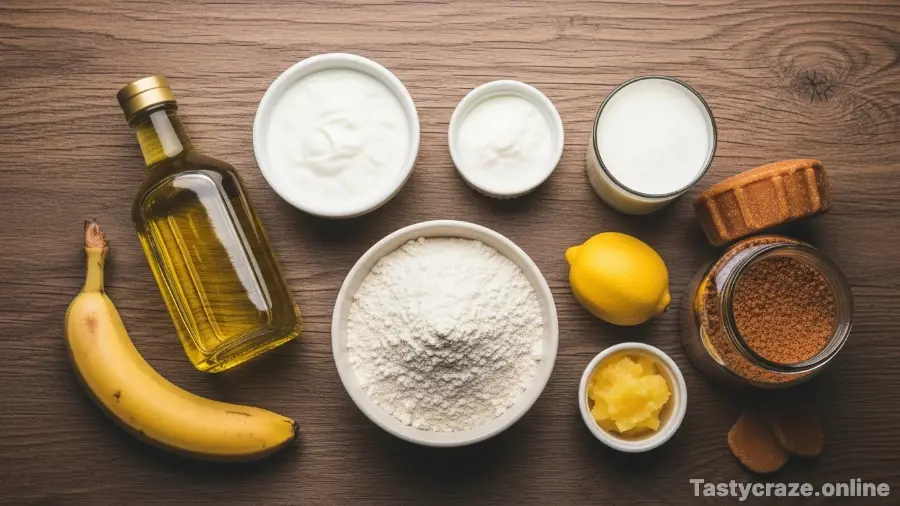
Imagine this. It’s a rainy evening in Lahore. You have a sudden shocking craving for a warm chocolate cake. You gather your ingredients. But then, disaster strikes! You are out of eggs. Don’t worry! These handy baking substitutes exist in your kitchen already. You don’t need to go running down to the store.
We have all been there. A recipe is written for something we just don’t have. As a result, many of us give up on any baking dreams. However, there are lots of secrets in your kitchen. It contains amazing alternatives which can save your dessert.
This guide will demonstrate to you how to use them. We will learn about some common ingredients which are found in every Pakistani home. These are the most basic exchanges that will transform the world of baking. You are ready to have the power of your pantry.
Understanding the Role of Ingredients in Baking
Before we get into substitutes, let us first understand what is the role of ingredients? Each one has a specific job. For instance, the eggs hold ingredients together. Particularly they also add moisture and make things rise up. Butter imparts flavor and a catastrophic texture. Similarly wafer flour gives structure to our cakes and cookies.
The trick to staying away from outside issues is the mastery of these underpinnings; in fact, many bakers advance their abilities by learning from common baking mistakes discussed by professionals in the Pakistani lifestyle columns.
When we use a substitute, we are trying to make a copy of that job. Sometimes, a substitute replaces the original person perfectly. Other times, it could change the last texture or taste a little bit. It has to do with knowing which baking substitutes to use and when. This knowledge will help mean that you are a more confident and resourceful baker. As a result, any recipe you see will be easy for you to tackle. You may even find some new favorite things along the way in terms of textures and tastes.
Substitute #1: No Eggs? No Problem!
Eggs are a strong ingredient when it comes to baking. They do so very much good for our recipes. For example, they bind, they leaven, they give richness. So what when there are no eggs in the egg carton anymore? Luckily, your readymade Pakistani kitchen is at your disposal in providing solutions. Several common items can manage to crawl in and play a fantastic job.
Using Yogurt (Dahi) as an Egg Substitute
One of the best baking substitutes for an egg is unflavored yogurt. We call it ‘dahi’ and it’s an Indian staple and present in our houses. It is almost always in the fridge. This makes it a very convenient option.
How It Works
Yoghurt is great to make things moist. It also adds a little bit of leavening, due to its acidity. This causes cakes and muffins to be incredibly soft and tender. The reaction of the acidity of the yogurt with a leavening agent such as baking soda causes a wonderful lift.
The Right Ratio
For each one egg required in your recipe, you can use 1/4 cup of plain, no-sweetened yogurt. It is that simple. Make sure that the yogurt is at room temperature. This helps it to mix with your other ingredients very well. Forgetting this is one of the common cooking mistakes that can happen to your final bake.
Best For:
Yogurt is best tolerated in cakes, muffins and quick breads. It has a slightly tangy flavour which in many cases is delicious. However, it might not be the optimal choice for using lighter and airier recipes such as an angel food cake, which rely heavily on the structure from the whipped egg whites.
The Magic of Mashed Bananas
Another fabulous alternative (egg counterfeit) is a ripe banana. You know, the one that is sitting on your counter that has a couple brown spots? That’s the one you want! The riper the banana is the more sugary it is and the better it works.
How It Works
Bananas are amazing binders. In addition, they add in a huge amount of moisture. This yields a very dense and moist end product. Plus, they have their own natural sweetness added to it. You may even be able to cut the sugar in your recipe.
The Right Ratio
Use one medium sized well mashed banana in replacement of one egg. As a matter of fact, you must ensure that it’s mashed up until its almost a puree. This is to ensure there are no large lumps in your batter.
Best For:
Mashed bananas are ideal for brownies, hearty cakes and pancakes. They will of course add a distinct taste of bananas. Therefore, you are recommended to use the in recipes where the flavor is welcome, such as a chocolate banana bread.
Flax Eggs: A Healthy Alternative
For a vegan and a healthy choice, a flax egg is a brilliant choice. This is a ground flaxseeds and water based flour. Furthermore, its a popular choice in the modern baking.
How It Works
What you do now, once you have broken down the nuts is that when you add ground flaxseeds to water it creates a gel. The consistency of this gel is very similar to a raw egg. It works as a good binder in many of the recipes.
The Right Ratio
To make one egg of flax, take 2 tablespoons flax seed, grind it, and require 3 tablespoon water for it. Then, let it sit for approximately 10-15 minutes so that it thickens. You can then use it as you would crack an ordinary one.
Best For:
Flax egg is great for baking, for cookies, brownies and pancakes. They add a slightly nutty and earthy flavor to it. They don’t provide leavening so they are best in recipes that have baking powder or soda.

“The Kitchen is a place of alchemy, a place where you have got a laboratory to create your magic.” Don’t be afraid to experiment.” – Unknown
Substitute #2: Beyond Butter: Smart Baking Substitutes
Butter is the center of many baked products. It adds that rich and creamy flavour. This also forms a tender flaky crumb. But what if you run out? Or what if you would like something more healthy than that? Your pantry has the answer. These are butter baking substitutes that is easy and effective.
Using Cooking Oil or Ghee
The most common substitute used for butter is oil or ghee. Every Pakistani kitchen has a bottle of cooking oil or a tin of desi ghee in it. This makes it an advantageously accessible swap.
How It Works
Oil is liquid fat and butter is a solid fat. This difference has an effect on the texture. Bakes that use oil are often moister and have more definitely tender or even crumb. Clarified butter known as Ghee is an intensely strong and nutty taste that is really special.
The Right Ratio
If a recipe is written with a 1 cup of melted butter you willroxbe able to 1 cup of oil. If it requires solid butter, then the ratio is slightly different. For your cooking, use 3/4 cup of oil for ever 1 cup of solid butter. For the ghee, you can usually use the ghee in a 1:1 suffice for melted butter. Using these swaps is one of many kitchen hacks that save time & gas.
Best For:
Oil is great for cakes and muffins and gives them a superior moist texture. Ghee is fantastic in the traditional Pakistani sweets and cookies. Where you can for example try it at a traditional Nan Khatai, a crumbly shortbread cookie. Many Pakistani chefs have perfected this like in this popular Nan Khatai recipe from Food Fusion That truly echoes the richness of ghee.
Applesauce for a Healthier Swap
Unsweetened applesauce is an unlikely substitute for butter but it works. It’s a great way to reduce your amount of fat and calories. This is perfect if you want to eat clean without cutting flavor.
How It Works
Applesauce is a very good source of moisture. It helps to bind ingredients together, as butter does. It works because it is a puree, which also adds some liquid, as well as body, to the batter.
The Right Ratio
And, you may use applesauce in the place of butter in a 1:1 ratio. However, for optimum appetite texture you’ll be tested to replace only half the butter with applesauce. For example, if a recipe is written to call for 1 cup of butter then use 1/2 cup of butter with 1/2 cup of applesauce.
Best For:
This swapping is great for spice cakes, oatmeal cookies and muffins. It can cause the final product to end up being a little more dense and cakier. It also gives it a hint of fruity sweetness.

Quick Conversion Chart
1 Egg =
¼ Cup Yogurt
OR 1 Mashed Banana
1 Cup Butter =
¾ Cup Oil
OR 1 Cup Applesauce
1 Cup Buttermilk =
1 Cup Milk +
1 Tbsp Lemon Juice
Substitute #3: Making Your Own Buttermilk
Many recipes, ones especially of old red velvet cake, or fluffy pancakes, call for buttermilk. It’s not something we have always to hand in Pakistan. But don’t worry. It is very simple to make a substitute butter milk yourself.
The Milk and Acid Trick: A Simple Buttermilk Alternative
This is one of the oldest tricks from the books on baking. It is a sure and quick method of creating a buttermilk-like ingredient. You just need the following two things you almost certainly have:
How It Works
Buttermilk is acidic. This acid is used to react with baking soda forming carbon dioxide gas. This reaction in turn causes baked goods to be light and fluffy. By adding an acid to regular milk we can recreate this chemical reaction.
The Right Ratio
To make 1 cup of buttermilk substitute take regular milk. Take 1 tablespoon of the milk out of it. Now, add 1 tablet spoonful of either white Vinegar (sirka) or fresh Lemon Juvice. Stir it well and leave it for approximately 5-10 minutes. The milk will turn kind of curdled and become acidic. It’s now ready to use!
Best For:
This homemade buttermilk works well in any recipe which calls for the real thing. Use it in cakes, scone, fried chicken batter and in pancakes. As a result, this gives you a tenderness in the crumb as well as a slightly tangy flavor just as you would like from buttermilk. The science that is behind this is fascinating, and an important component of numerous fusion food trends.

Substitute #4: DIY Baking Powder Solutions
Baking powder is an important leavening agent. It is what gives our cakes their high and proud growth. It’s a com messed up of an acid, a-type base (baking soda) and a type starch. What do you do if you have an empty little tin/ You can prepare your own using other food items found in your pantry.
The Classic Homemade Baking Powder
This is a very potent home made baking substitute. It requires two ingredients that are common among dedicated bakers.
How It Works
This concoction is a mixing of baking soda (or the base) and cream of tartar (or the acid). When this mixture become wet in your batter the two components react. This reaction releases the gas bubbles which produces a rising effect of your bake.
The Right Ratio
The preferable method is to make 1 teaspoon of baking powder by mixing the 1/4 teaspoon of baking soda with 1/2 teaspoon of cream of tartar. If you would like to make a bigger batch to store you can also add 1/4 tsp cornstarch. This absorbs moisture and prevents clumping of that moisture.
Best For:
This does work in any recipe calling for baking powder. For the best results use immediately after mixing. The leavening power may diminish after a period of time if it is not stored in an airtight container. If you are running a home-bakery shore, the mastery of these substitutes can save your life! It’s also a major skill before you’ve even considered how to market your bakery on Instagram.
The Simpler Baking Soda and Acid Method
Recently Mrs F and I have been trying to find ways to make this cookie recipe with less ingredients. There is another way. You can also use baking soda but you will need to add an acid to your recipe to activate the sulfates or baking soda.
How It Works
Baking soda requires an acid for it to work. If your recipe already contains an acidic element such as yogurt or lemon juice or buttermilk, then you may be able to just use baking soda. If not, you’ll need to add one.
The Right Ratio
To use baking soda instead of baking powder, remember that 1 tsp. of baking powder requires 1/4 tsp. of baking soda for use in. But you also need to add about 1/2 teaspoon of lemon juice or vinegar to your wet ingredients in order to activate the soda. This is a delicate balance. Indeed, too much baking soda may give a taste soapy.

Substitute #5: Creating Brown Sugar at Home
Brown sugar adds a wonderful and deep molasses flavor to cookies and a chewy texture. It’s basically white sugar to which they add the molasses back in. In Pakistan, we have great alternatives like ‘gur’ or ‘shakkar’ but sometimes it is used in a recipe which specifically needs that classic brown sugar texture.
White Sugar and Molasses (or a Local Twist)
It is easy for you to create your own light or dark brown sugar. All you need is granulated white sugar and molasses.
How It Works
By combining molasses with white sugar, you are recreating what brown sugar is. You can brainwash how dark your brown sugar would get, depending on the number of molasses you will add.
The Right Ratio
In order to make 1 cup of light brown sugar, mix 1 cup white granular sugar with 1 tablespoon molasses. For dark brown sugar, 2 tbsp of molasses will be used. Mix it with a fork or your hands (fingers), until it is done.
Using Gur or Shakkar in a Pinch
For true Pakistani it is possible to use finely grated jaggery (gur) or ‘shakkar’. These are the unrefined sugars common in our diet and in particular during the winter. They have a rich and complex flavor. You can find them in places that are famous for the traditional foods very much like street food gems around Lahore.
How It Works
Gur and shakkar are natural with molasses content and moisture. Often they can be substituted 1:1ly for brown sugar. However, the flavor of them is much more intense and earthy.
Best For:
Gur is amazing in traditional sweets, oat meal cookies or in spice cakes. It has a special, rustic taste. Be aware that it can alter the taste profile of recipes that are delicate like in a classic chocolate chip cookie. By playing around with such local ingredients self-experimenting during the baking process is also a fun aspect of baking.

“Baking is controversial and about a lot more than following a recipe.” “It’s about knowing what’s in it and working with what it’s in it to do the things you want.” – Dorie Greenspan
Substitute #6: Flour Power – Adjusting for Different Flours
An all purpose flour (maida) is the standard most baking one will use. But sometimes you may only have whole wheat flour (atta) or self rising flour. Knowing how to adapt is a good thing to use. These flour baking substitutes can be a life saver.
Using Whole Wheat Flour (Atta) as a Baking Substitute
‘Atta’ is a staple to do our daily rotis. It’s a whole grain flour this means it has got its bran and the part called the germ in it. This makes it healthier but it also makes it heavier.
How It Works
Atta absorbs more liquid as compared to maida. It also contains less gluten which can lead to heavier baked goods with a higher density. The bran can also cut through the strands of gluten, which affects the rise.
The Right Ratio
For the best results don’t substitute it completely. A good beginning is to use whole wheat flour in place of 25-50% of the all purpose flour. For each cup of whole wheat flour you use, you may even have to add an additional 1-2 tbsp. of liquid. In case of a lighter texture allow the atta to be sifted a few times.
Best For:
A bebeb a combination of atta as well as maida works well in rustic breads, muffins and cookies. It adds a beautiful nutty taste as well as added fiber. Using atta is great for anyone also on a nutritionist-approved meal plan as well as to boost the nutritional value.
When You Only Have Self-Raising Flour
Self-raising flour has baking powder and salt added to it. If your recipe calls for all-purpose flour, then you are going to have to compensate for it with different leavening agents.
How It Works
Since there is leavening within the flour already you need to skip the baking powder and salt listed in the recipe. This is a critical step.
The Right Ratio
To use self-raising flour in a 1:1 substitution, you can use self-raising in a replacement of all-purpose flour. Then, for every 1 cup of self-raising flour, it is essential to omit 1 1/2 teaspoons of baking powder and reduce 1/2 teaspoon of salt in the original recipe.
Best For:
This is a great shortcut to making breads and scones and simple cakes – quick and easy breads. It’s not very ideal for yeast breads as yeast breads require a different type of leavening.

Flavor & Texture Swaps
How common baking substitutes change your final product:
🧈 → 🫒
Result: Moister, more tender crumb. Less “buttery” flavor. Excellent for keeping cakes soft for days.
🥚 → 🥣
Result: Very soft and moist texture. A slight tangy flavor. Great for muffins and quick breads.
🍞 → 🌾
Result: Denser, heartier texture. Nutty flavor. Higher in fiber. Best used as a partial substitute.
Substitute #7: No Chocolate? Improvise!
The following may be the saddest baking emergency. You’re prepared to prepare brownies and there’s no baking chocolate. Do not despair! Cocoa powder to the rescue comes. Besides, for some more ideas on things that are new and exciting in the food world, you might enjoy digging a little into the latest TikTok food trends.
Cocoa Powder to the Rescue for Chocolate Cravings
Unsweetened cocoa powder smells and tastes like a strong chocolate flavor. The one major difference is that it does not contain the cocoa butter (fat) found in solid chocolate. Therefore, all we have to do now is to add that fat back in.
How It Works
So by combining cocoa powder with a fat, such as butter or oil, and a small bit of sugar you can make up a substitute for unsweetened or semi-sweet chocolate.
The Right Ratio
To substitute for 1 ounce (approximately 30g) of unsweetened baking chocolate, 3 tablespoons unsweetened cocoa powder and 1 tablespoon melted butter, ghee or oil can be used. If you are replacing semi-sweet chocolate you will also wish to add 1 tablespoon of sugar to this mixture.
Best For:
This is an excellent alternative to brownies, chocolate cakes and sauces. With this method, you can adapt an almost any standard recipe of chocolate. For instance, if you know what you are doing, you might then try your hand at adapting a classic such as this Fudgy Brownies Recipe from SooperChef using your cocoa powder mixture. The end results will be delicious.
A Note on Chocolate Chips
If a recipe calls to fold in chocolate chips, this is not going to work as well. The cocoa powder mixture will just mix into the batter. In this case, you could try chopping up whatever bar of chocolate you have on hand, such as a bar of Dairy Milk. The results will be slightly different however still delicious! This kind of creative thinking is what led to the finest dishes from places like the famous Lahore street food scene being born.

“The only real stumbling-block is fear of failure.” It’s in cooking, you’ve got to have a have a what-the-hell attitude. – Julia Child
Conclusion: Bake with Confidence and Creativity
Baking must be fun and accessible, and not a stressful experience. The next time you realization something is missing from an ingredient that is on the list. Look in your own Pantry – a Pakistani Kitchen First Check. You will most likely get your perfect solution waiting for you. From yogurt as your egg replacer to making your own brown sugar with the gur, it is these tricks which make you a militant. As a result, they not only save you a lot of time and money but also a trip to the store.
With these smart baking substitutes in hand you are the more resourceful and intuitive baker too. You get learning about the ‘why’ not just the ‘how’ with recipes. It solves a whole new world of possibilities, whereby you can adapt recipes to your taste, what your body needs and what you have available. So go ahead and bake with confidence with the usage of these amazing baking substitutes.
Frequently Asked Questions (FAQs)
1. Can I use salted butter instead of unsalted?
Yes, you can. You just have to reduce the salt quantity in the recipe. As a rule, for every 1/2 cup (1 stick) salted butter, cut the amount of salt added by one-fourth a teaspoon.
2. My oil substitute made my cake greasy. Why?
This may be due to using too much oil. Remember the ratio – multiply 1 cup of solid butter by 3/4 – that is they are the same volume in capacity for 1 cup of solid butter, give 3/4 cup of oil. Over-mixing the batter when oil is added can have the same effect of greasy texture.
3. Does using ‘gur’ or ‘shakkar’ change the baking time?
Generally, no. However, in addition they have a higher moisture content than regular brown sugar, your bake may be a little moister. As you would normally check for doneness, always use a toothpick.
4. Can I use lemon juice from a bottle to make buttermilk?
Yes, bottled lemon juice or vinegar (sirka) will work just fine to make a recipe for buttermilk substitute. Fresh is great, but bottled will work just as well as far as providing the acidity needed.
5. What is the best egg substitute for cookies?
It depends on the cookie! For a chewy cookie, an egg, such as flax seed makes a good binding agent. Apple sauce is also great for binding. For a cakier cookie, another good choice may be yogurt. Each of these baking substitutes will slightly change the end product texture.